Why Most Remodels Go Wrong (And It’s Not the Contractor)
There’s a moment in almost every remodel where things start to wobble.
It’s not demolition.
It’s not framing.
It’s not even installation.
It’s decisions.
Too many decisions made in isolation.
Tile chosen without cabinetry.
Cabinetry chosen without flooring.
Countertops chosen before hardware.
Paint selected before anything else.
And suddenly the space feels slightly off. Nothing terrible. Just not right.
Most remodels don’t fail because of bad contractors.
They fall apart because the material story was never aligned.
Pinterest Isn’t a Plan
We love inspiration. We live on it.
But a saved image doesn’t tell you:
What direction the house faces
What the natural light does at 4pm
What your flooring undertone is
Whether your stone leans warm or cool
If your grout will clash
Design decisions can’t be made one screenshot at a time.
They have to be made together.
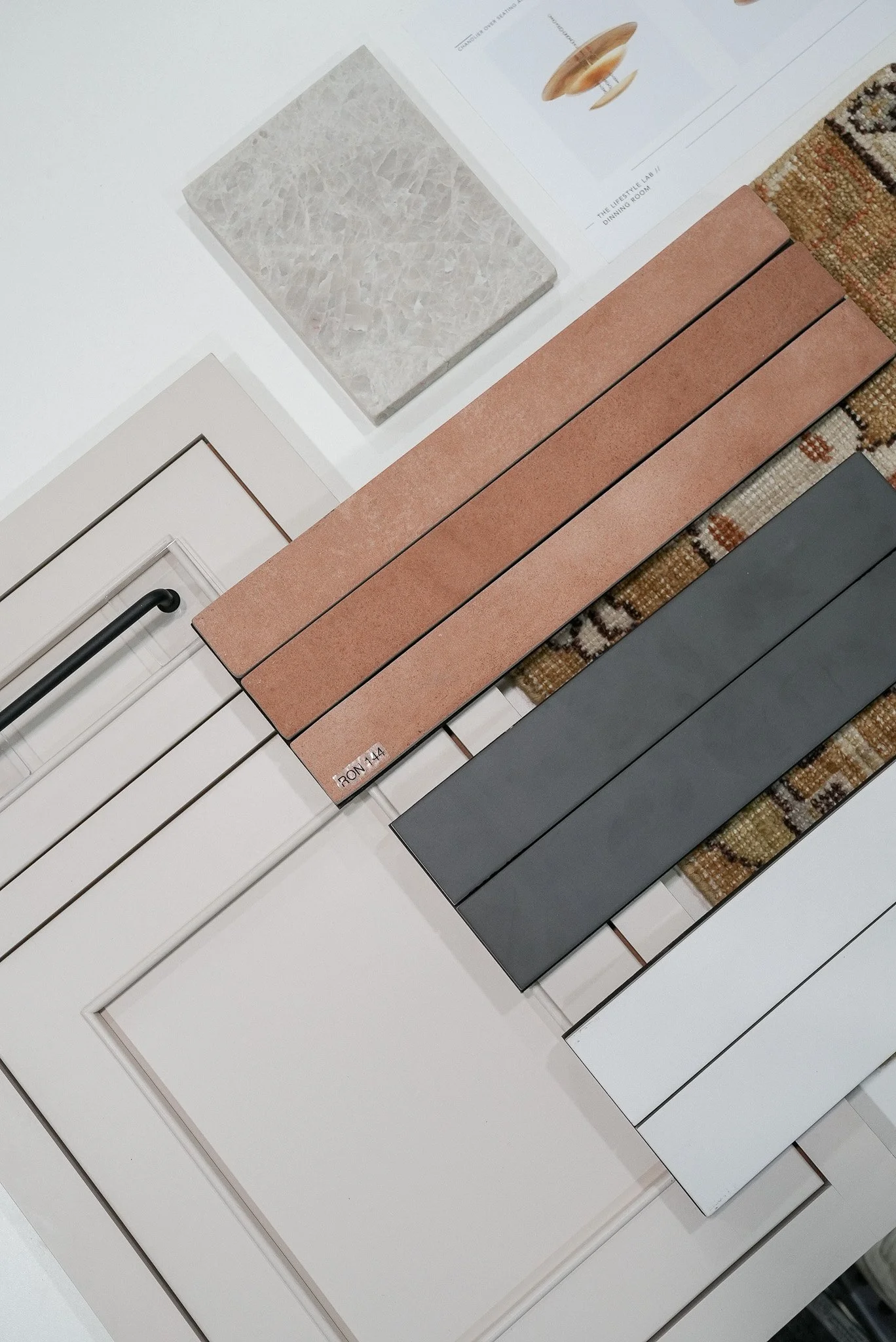
Materials Have to Talk to Each Other
This is where most people underestimate complexity.
A tile might look beautiful on its own.
A cabinet color might look perfect on its own.
A countertop slab might feel like a dream on its own.
But put them together and suddenly one of them is screaming.
Good remodels don’t happen because each item is beautiful.
They happen because everything belongs in the same sentence.
That’s not about trends.
That’s about editing.
Budget Mistakes Happen Early
Another place remodels go wrong? Allocation.
Clients overspend on one statement piece.
Then have to compromise everywhere else.
Or they play it safe across the board and the home ends up flat.
The smartest projects aren’t the most expensive ones.
They’re the ones where the budget was distributed intentionally.
Sometimes the splurge is cabinetry.
Sometimes it’s stone.
Sometimes it’s lighting.
But the decision is strategic.
The Advantage of a Material-First Studio
This is why we start with materials, not furniture.
We’re not pulling samples from a tote bag in an office.
We’re standing inside a showroom where cabinetry, tile, flooring, hardware, and stone live in the same space.
We can see undertones instantly.
We can test combinations in real light.
We can build a full palette before a single order is placed.
It changes the outcome.
What a Well-Designed Remodel Actually Feels Like
It doesn’t feel chaotic.
It doesn’t feel like guesswork.
It doesn’t feel like every decision is a gamble.
It feels clear.
When cabinets go in, you already know the tile works.
When countertops are installed, you already know the hardware makes sense.
When paint goes up, it feels obvious.
That clarity is what separates stressful remodels from smooth ones.
Not luck.
Alignment.
Good design isn’t about having more options.
It’s about making the right decisions in the right order.
